BPC-157 and Alcohol: Is It Safe to Combine?
Can you mix BPC-157 and alcohol? What available research says about the interaction, plus practical considerations.
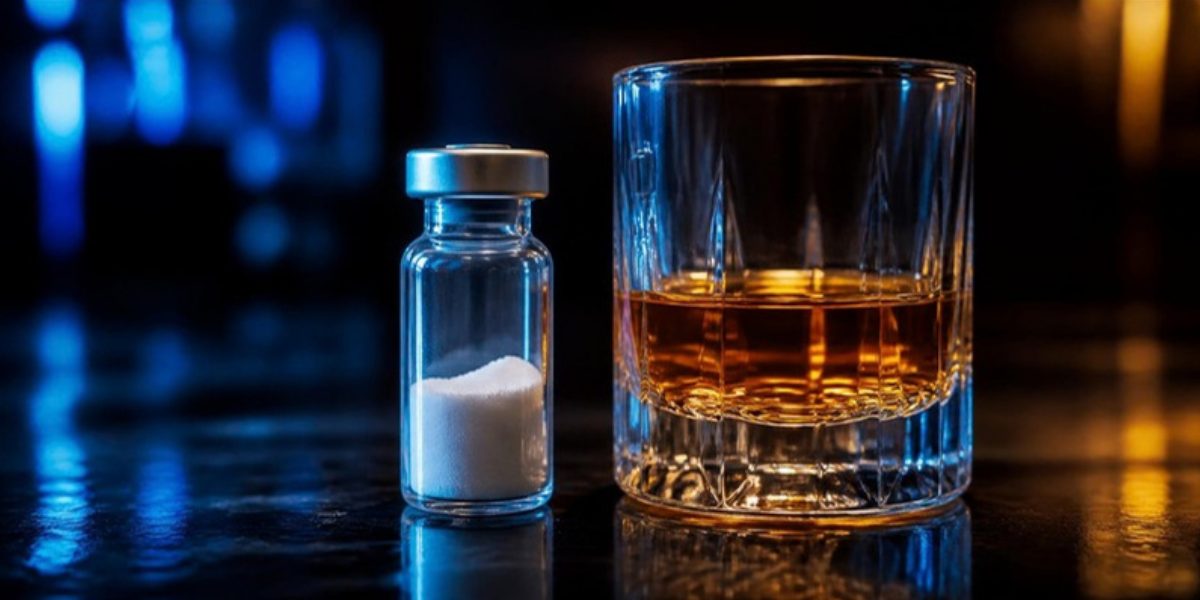
A very frequent inquiry we receive from readers concerns the pairing of BPC 157 with alcohol. The straightforward answer is very short: no research has been done on this combination in human beings. There are no research papers showing interactions, no clinical findings, and nothing published that can be used to give guidance. We only know of some studies done on rats that BPC 157 could have a protective effect on organs against ethanol damage, along with a multitude of posts on forums by people who tried combining them. Below we present the summary of the animal studies, tell of the gaps in knowledge, and describe the cautious approach.
BPC-157 and Alcohol - What We Actually Know
No Direct Interaction Studies Exist
The answer is no. No evidence has been provided in rats, cell cultures, or humans. Most studies simply do not investigate the bioavailability of BPC-157 when given together with ethanol, or whether the healing qualities are diminished, or whether any new toxic metabolites are formed. Most studies give BPC-157 to animals after inflicting damage through alcohol, meaning that they have a treatment approach rather than an interaction approach.
A 2025 literature review covering decades of BPC-157 research confirmed that interaction data with common substances, alcohol included, remains absent from the published record.
Why People Ask This Question
Most BPC-157 users are adults who drink socially. They want to know if a beer on Friday will cancel out the peptide they injected that morning, or if the combination creates a safety risk. Neither question has a sourced answer. The concern is reasonable given that BPC-157 influences the nitric oxide system and alcohol is a vasodilator. Two vasodilators together could, in theory, amplify blood pressure drops. But "could in theory" is not evidence. We flag it because readers deserve to know the gap exists, not because we can fill it.
How Alcohol Affects Peptide Metabolism
Liver Processing and First-Pass Effects
The main organ responsible for alcohol metabolism is the liver, aided by the enzymes alcohol dehydrogenase and CYP2E1. Peptides which are consumed orally are first processed by the liver prior to being put into the bloodstream. Excessive alcohol consumption stimulates the CYP2E1 enzyme system, which is helpful in creating free radicals and potentially overhauling the way peptides are metabolized during the first pass. A definite review done in alcohol-induced multi-organ damage showed how chronic ethanol consumption affects liver activities in different ways. The effect of ethanol on BPC-157 degradation, however, has not been established.
By means of injectable BPC-157, the process of first-pass metabolization doesn't occur, so that the peptide makes its way into the bloodstream before the liver. In this regard, it has been proposed by some researchers that the administration of BPC-157 in subcutaneous form could be less affected than the oral administration in case of concurrent alcohol consumption, albeit proper tests were not conducted to confirm that.
Gastric Mucosa and Oral BPC-157
The drug known as oral BPC-157 supposedly functions locally on the gastric lining before actually being absorbed systemically. When it comes to alcohol, however, it harms the gastric mucosa directly by eroding the endocrine mucosa and increasing permeability. Consuming BPC-157 orally may result in different absorption profiles where it interacts with damaged tissue as opposed to healthy one. This leads to different effects depending on the tissue type that BPC-157 operates on. There are many instances when laymen assumed that oral BPC-157 "protects" the stomach from alcohol damage but no evidence has been shown in humans for that.
| Claim | Evidence Level | Source |
|---|---|---|
| BPC-157 protects rat livers from ethanol damage | Animal data (rats) | Preclinical studies |
| BPC-157 protects rat gastric mucosa from ethanol lesions | Animal data (rats) | Preclinical studies |
| Alcohol reduces BPC-157 bioavailability | Not studied | None |
| Combining the two in humans is safe | Not studied | None |
| Combining the two in humans is dangerous | Not studied | None |
BPC-157 and Liver Protection Research
Animal Studies on BPC-157 and Ethanol Damage
The strongest data on BPC 157 and alcohol comes from rodent models of ethanol-induced organ injury. A 2004 study administered BPC-157 to rats with alcohol-induced gastric and liver lesions and found that the peptide reduced mucosal damage, lowered liver enzyme elevations and counteracted some markers of oxidative stress. The rats given BPC-157 showed less necrosis in liver tissue samples and better preservation of gastric mucosal integrity compared to controls.
Further preclinical studies demonstrate BPC-157’s ability to decrease lesions in the NSAID-induced gastric injury models, implying that the action of the peptide may be linked to a general protective mechanism not limited solely to alcohol-induced condition. The peptide also seems to have an influence on the protective functions and enhancements of blood supply into damaged areas of the body through its action linked to nitric oxide system.
What This Does and Does Not Prove
The research findings prove that c-Peptide can provide detectable cytoprotection in rats suffering from alcohol injury. However, these studies do not show that drinking is allowed while receiving c-Peptide without suffering from liver and stomach troubles. The receiver’s weight and other parameters did not match the human profile and the doses applied were the same under laboratory conditions rather than some usual drinking settings.
In addition, there is an issue with directional orientation. The studies administered BPC-157 as a response to the damage already done, or along with the alcohol challenge. They did not examine if already-present BPC-157 in the body was effective in preventing damage from consuming alcohol hours later. We point this out since the most relevant situation for a regular reader, that is, BPC-157 administered in the morning and drinking in the evening, was not taken into account in these studies.
Practical Considerations
Community Reports on Mixing the Two
Online peptide communities are full of anecdotal reports from users who drank alcohol during BPC-157 cycles. The majority describe no obvious negative interaction. A smaller group reports increased nausea, stronger-than-expected intoxication effects, or feeling "off" the morning after drinking. These reports are uncontrolled and unverifiable. Selection bias is heavy: people who had a bad experience may stop posting, while people who felt fine are more likely to share. We have cataloged reader questions on this topic for over a year, and the pattern we see most often is mild nausea when alcohol is consumed within a few hours of an oral BPC-157 dose. For a wider look at these reactions, see our guide to BPC-157 headache, nausea and fatigue.
The Conservative Approach
Try to leave a gap of the maximum possible hours between the two events. When injected, the peptide reaches high plasma concentrations quite rapidly and is eliminated relatively quickly. Waiting at least four to six hours after injecting the substance to have alcohol minimizes how much time the two events will overlap, but this timing is based on the pharmacokinetics of peptides in general and not specifically BPC-157.
In case you use oral BPC-157, it is more important to pay attention to gastric mucosa. Taking the capsules on an irritated and alcohol-exposed stomach differs from taking it on a healthy and fasting stomach. So it is logical to take the capsules after a full meal cycle.
Heavy alcohol use or chronic alcohol use is a different category. Chronic alcohol consumption leads to body-wide inflammation, liver complications, and changes in peptide processing, which are not caused by social drinking. If you drink heavily, the real problem isn't BPC-157 but whether your body is able to handle any peptide that you take. For more information on safety issues, see the BPC-157 side effects overview.
FAQ - BPC-157 and Alcohol
Can I drink alcohol while taking BPC-157?
No proof has been released to suggest it is unsafe, but so far no evidence exists that supports its safety. There are no human studies regarding the interaction of bpc 157 and alcohol. So the advisable approach is that you should wait for a few hours between taking both substances and not drink heavily while on the BPC-157 cycle. If you start to feel dizzy or nauseous, you should increase the time between the applications of the two substances.
Does alcohol cancel out BPC-157?
Unknown. No investigation has been undertaken to assess the impact of alcohol on the bioavailability of BPC-157 or on its capacity to regenerate tissues. Based on data from animal studies, it appears that BPC-157 has cytoprotective properties in the presence of alcohol, although this does not reveal anything in terms of dosing for humans. The safest conclusion is that alcohol does not have clear positive influence on this substance, even if it does not completely preclude it from working.
How long should I wait between BPC-157 and alcohol?
There have been no intervals studied. Due to the general principles of peptide pharmacokinetics and half-life estimations for similar substances, waiting from four to six hours after the injection may create some separation before consuming alcohol. As for the case of oral BPC-157, the recommendation is to wait until the next food intake in its cycle following its application. While this is not based on scientific evidence, it is a sensible way of approaching the situation given the absence of any pertinent data. For more detailed information about the effects of BPC-157 on blood pressure, which is also influenced by alcohol, please refer to our specific passage about this topic.
Keep reading
BPC-157 Headache, Nausea and Fatigue Explained
BPC-157 headache, nausea and fatigue reports examined. What might cause them, how often they appear and what helps.
BPC-157 and Anxiety: Can It Help or Harm?
Does BPC-157 help or worsen anxiety? We examine the dopaminergic research, animal behavior studies and community reports.
BPC-157 and Blood Pressure: What Research Shows
Does BPC-157 affect blood pressure? We review the nitric oxide pathway research, what animal models suggest and what remains unstudied in humans.
Compare the current picks
Prices, sizes and ratings side by side, updated when the merchant pages change.
See top picks